STRETCH & REST CARE for the wellness warrior |
|
It was an accidental finding. A few months ago, I uncovered an issue I didn’t realize I had until it improved. During the transition to Menopause, I started having significant issues with getting deep sleep. I was stuck in this cycle of poor sleep leading to increased anxiety and a harder time managing stressors that went round and round despite my best efforts. It was impacting my health and performance. I’d been taking Melatonin for almost a year which had helped tremendously but I didn’t want to stay on it long term. I'd made other changes that I've shared to improve my sleep quality as well. I wasn't sure what else I could do. I was always cautioned to stay away from hormone treatments due to my mother’s history of breast cancer. My current medical providers weren’t sure about what to recommend hormone wise either. Very overwhelming and difficult to find any good advice. I kept searching and finally heard about a Menopause Specialist. I did a consult with her in March. As we dug into my symptoms, I realized I’d started having issues with my bladder. Not UTI’s but increased frequency during the day and night. More bathroom trips at night. And if I had a full bladder and coughed or sneezed, I’d have to prep with a pelvic floor contraction or I might leak. It just kind of snuck up on me over the years. Looking back... my bladder was slowly becoming overactive. Estrogen plays a protective role in our Bladder Health as well as preventing vaginal atrophy and dryness. It keeps the urinary tract and vaginal tissue healthy and flexible. Turns out I was a candidate for low dose vaginal estrogen therapy (i.e. Estradiol 0.01%) as it’s NOT systemically absorbed by the body. It's a local treatment. The first week I used it, I slept better than I had in YEARS. The biggest change- my bladder wasn’t waking me up as frequently. It could hold more so I was getting deeper sleep. Bonus Ender's (and our dog-Teddie's) snoring wasn't waking me up! And I was waking up more rested. I stopped Melatonin after a few treatments of vaginal estradiol without any issues. After a few weeks, I was rarely waking up to go to the bathroom at night. That literally hasn't happened since my late 30's. I also started noticing I didn’t leak if I forgot to prep with a Kegel contraction before a sneeze or cough. After a few months, I’m telling everyone about it. Vaginal Estradiol is safe to use in menopause and post menopause indefinitely for bladder issues (stress or urge incontinence, frequent UTI’s) and/or vaginal issues (pain, dryness, atrophy). The urologists I follow on X can't stop shouting how they give it to all their patient's with frequent UTI's. No more antibiotics. You can even use it as a preventative for atrophy that will occur when there is low Estrogen levels. Atrophy can lead to prolapse of urethra, bladder, vagina, or rectum. Trust me something you do not want to happen if at all possible. It can be used in perimenopause if you’re symptomatic as well. It's typically 1 gram of the cream 2-3 times per week but also comes in tablets. And no it's not messy. So simple and so much to gain. You’ll know after a few applications if your body finds it beneficial. I recommend you talk to your gynecologist or urologist about it (today). NOTE: You may hear that there is a Black Box warning that it should not be used in those with breast cancer or risk of it. Don't freak out- do your research. The data shows local vaginal therapy does NOT increase risk of breast cancer. There are no studies showing it spreads to other areas of the body or blood. It does not increase risk of blood clots, heart disease, or dementia. There are oncologist that recommend it for their breast cancer patients even those in active treatment. Talk to a specialist or keep searching for a physician that can address your symptoms and personal medical history (especially if they're stuck on this issue). I look forward to a day when all post menopausal women will be prescribed vaginal therapy just like we brush our teeth daily. Consider adding it to your Healthy Bladder Toolbox. It's never too late. I've heard stories about women in their 80's and 90's finally getting relief when their daughters got them on it. I’m so grateful that my quest for deep sleep led me to it. Despite my focus on promoting having a healthy pelvic floor, I truly didn't connect the dots on the changes in my own bladder function until I experienced these improvements. Resources:
If you suffer from leaking or frequent urination, there are a few more potential causes to consider besides Bladder irritants and low Estrogen. I’ll share them with you next week. Remember leaking is common with aging but not normal. There is hope. You just have to uncover the cause/s and figure out a plan to address it. To A Healthy Bladder! Mollie P.S. Want better energy, mobility, & strength? Our FREE Summer Workshop & the inside scoop on our next REST Camp: SHINE™ is coming soon! Get on the interest list here.
0 Comments
Has this snuck up on you too? Those trips to the bathroom at night? It's common as we age but there really isn't any research to show it's normal. You may not realize how disruptive to deep sleep every bathroom trip is. I didn't until recently. I've been working on improving my sleep quality for over a year but hadn't really addressed my bladder. I'd connected the dots on drinking fluids late at night with more frequent trips but not much beyond that. It helps me for sure to limit fluids a few hours before bed and just take sips of water if I need it during the night. And last year I'd cut back on caffeine as I became more sensitive to it disrupting my sleep. But there is much more you can do to improve your bladder health and ultimately decrease those trips to the bathroom. Let's start with 6 Bladder irritants you may not be aware of:
Not everyone is sensitive to these but it's worth checking out to help your brain know it doesn't have to send a signal to your bladder to empty at night. Uncovering your sensitivities can also help if you have frequent UTI's (Urinary Tract Infections) or leaking when you sneeze, cough, laugh, or during activity. It might take some detective work and monitoring your bathroom trips to figure out if you're sensitive to any of them. If you do uncover sensitivities, start to reduce how often you consume them especially later in the day. For some, you may have to eliminate them all together. Next up, I'll share what has eliminated my trips to the bathroom most nights AND helped me stop needing Melatonin the first week I started doing it. To Better Sleep! Mollie P.S. Ready for more Energy & Flow? It's almost time for our FREE Summer Workshop & the inside scoop on our next REST Camp: SHINE™! Get on the interest list here. Happy Earth Day! Earth Day is always great time to explore fun new ways to support nature and the planet. Let's start by celebrating some WINS! There is evidence that some animals like butterflies, whales, and gorillas are rebounding. It appears that the effort to restore the ozone layer is on track to make a full recovery. There are over 60 Dark Sky Parks, Communities, & Reserves. Dark Sky recognition requires dedication to preserve the night sky by decreasing harmful effects that artificial light at night has on humans, wildlife and the environment. We are fortunate to be surrounded by several Dark Sky Communities (Bee Cave, Dripping Springs, Wimberly, Horseshoe Bay, and Fredericksburg) and my old neighborhood (Lost Creek). Now let's celebrate Earth Day! 4 Ways To Support Nature & The Planet: 1. Green Exercise: Make it part of your daily routine to spend some time in nature and add exercise- anything from cardio (walks, hiking, kayaking, paddle boarding, cycling) to relaxation exercises (breathing/stretching, Yoga, Qi Gong, Tai Chi, napping in a hammock) outdoors will give you the health benefits of both exercise and nature. Bonus points if you go explore a National Park sometime soon. 2. Listen to NATURE on Spotify: it helps the Earth receive streaming royalties that go toward conservation efforts. It's no joke. Learn more here. 3. Learn more about the Native Lands you live on: Interactive Global Map. 4. Restore Nature in your area: Plant native pollinators to help the bees & birds. You can find native pollinator plants by state or region here. You can find volunteer opportunities in your area to help restore nature here. You can find more resources and ideas to celebrate Earth Day & support the healing of our Planet on this FIT BLOG. Which one sounds fun to do this week? To Mother Earth! Mollie P.S. Interested in becoming part of Rest Crew #2 for our next round of Rest Camp? Details for SHINE™ are coming soon- join the wait list here. P.P.S. April 22nd is also National Beagle Day! Every Rest Camp sale supports an organization that improves the health & welfare of animals including Beagles. One of our favs to support is Beagle Freedom Project. They rescue and rehome beagles & other animals who have been used for lab testing in the U.S. and abroad. They also work tirelessly to champion laws & legislation to ban the cruel practice of animal testing nationwide. You know that warm, fuzzy feeling that washes over you when you’re in love? That's your LOVE hormone, Oxytocin, in action. It helps encourage us to bond with others. Like a mom & her baby while nursing. Although physical touch is the fastest way to boost your Oxytocin levels, there are some simple moves you can do to get that loving feeling going. Just a 10-20% increase will promote the relaxation response- hello Relaxed Body! Oxytocin increases your mood, empathy, trust, and openness to connect with others. It decreases cortisol, inflammation, the pain threshold, stress, and even withdrawal symptoms. Signs that it’s low include muscle aches, poor sleep, irritability, anxiety, sugar cravings, poor communication, and difficulty achieving orgasm. It definitely has some powerful jobs in the body so let’s get it flowing. 13 Moves To Boost Your Love Hormone, Oxytocin:
Lovingkindness Meditation (say out loud to yourself): May I be happy. May I be safe. May I be free of physical pain and suffering. May I be able to recognize and touch harmony and joy in myself. May I nourish wholesome seeds in myself. May I be healthy, peaceful, and strong. Spread the Love: You can say it for other people you care about as well but only after you’ve said it for yourself first. You can even expand it to strangers or a larger community. When you say it for others, change the word “I” to the name of the person (or group) you would like to say it for. Example: May (name of loved one or group) be happy. May (he/she/they) be safe. OVER TO YOU: Pick one of the Oxytocin Moves above to boost or bring back that loving feeling. See which ones work best for you. You don’t have to be into the hoopla around Valentine’s Day this year, but it's a great reminder to #1 do something that brings you joy and #2 find time to connect with others this week. Ender, Teddie and I will probably do a movie night tonight, but started the week off enjoying that awesome Super Bowl. On Friday, I'm looking forward to a karaoke happy hour I've got planned with some old friends. That'll hit a few moves on the list for me. What about you? Hope you have time to play & have some fun too! Happy Valentine's Day! Mollie P.S. No pet? No problem. Just stare into Teddie's eyes... P.P.S. Want more Relaxed Body Moves to add to your Rest Toolbox? Get started with this 3 minute Active Recovery Workout: Download Now Have you picked your 1 thing for 2024? That one goal you want to focus on? It could be improving your
Whatever it is, let's set you up for success. Use this brain hack to help you create lasting transformation as you develop your new habits: Celebrate Your Wins. If you’re trying to change behavior, you’ll want to celebrate more often. BJ Fogg, Stanford Behavior Scientist, has found that when we connect celebrating ourselves with new habits we are trying to change it’ll help you build a new behavior. When you celebrate a win, it sets off a physiological reaction that releases the happy chemicals in your brain and connects it to whatever you are celebrating. The more you celebrate something and associate it with feeling good, it’s more likely you will do it. Sort of sounds like dog training, doesn't it? Reward the good behaviors and you’ll get more of them. Also some parenting approaches. Since we’re all about Daily Mini Moves to help you have more energy, ease and flow, celebrating your wins to reinforce healthy habits will give you the dopamine hit your brain & body love instead of that bag of chips, the donut, the alcohol, the Netflix binge. Daily practice will get in the brain reps in that are needed to lay down new neural pathways until it’s an engrained, automatic healthy habit, or routine. If you want to go deeper, BJ Fogg’s website is full of resources including his book “Tiny Habits: The Small Habits That Change Everything.” Over To You:
We're here to celebrate your Wellness Wins & help you grow your Rest Toolbox so you can have a Calm, Strong, Rested Body and stay active & agile no matter your age. Cheers to a Peaceful, Playful, Joyful 2024! XO- Mollie, Ender, & Team Core Power We believe Rested Healers, Leaders, & Creators will heal the planet. Let’s Rest More To Heal More. Your Body. Others. The Planet. It's T-I-M-E! We've opened the Waitlist for our NEW Rest Camp. Calling all Busy Bodies & Brains... 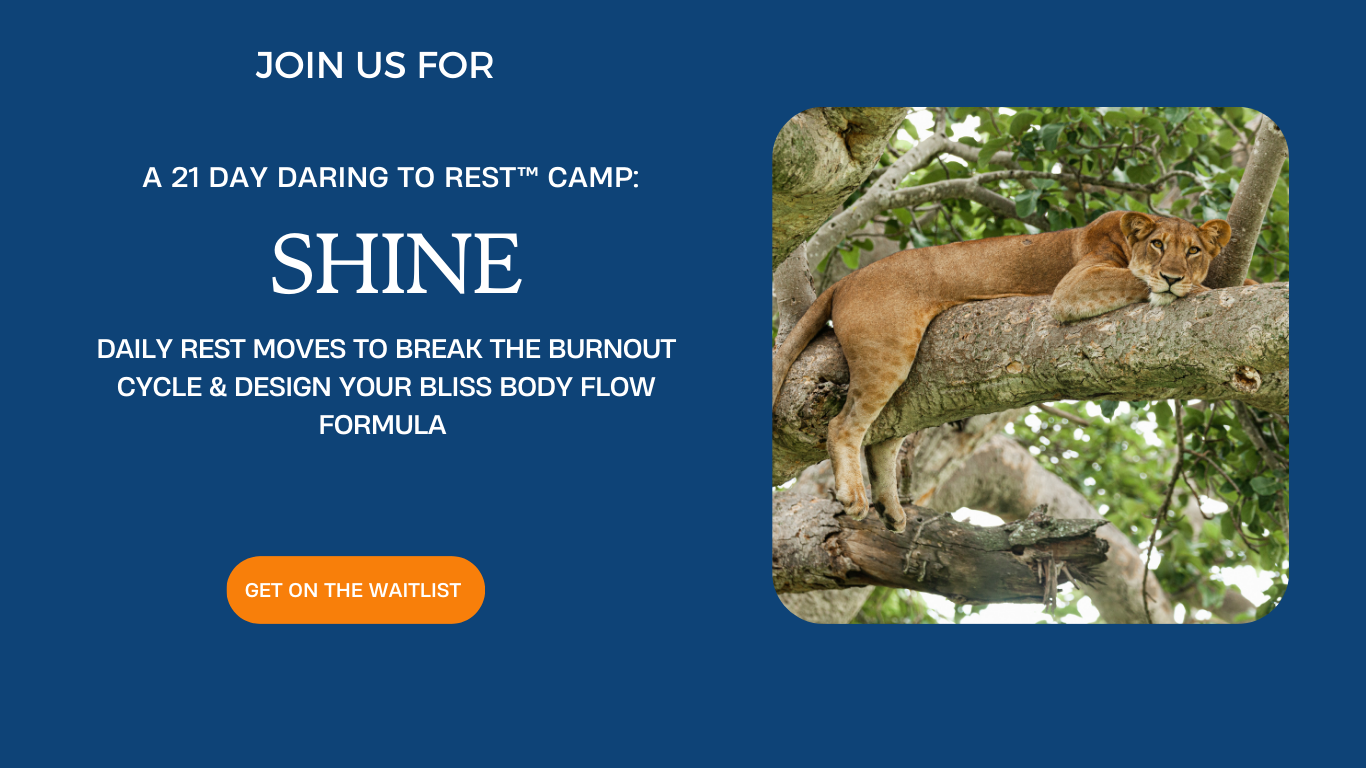 Anyone on the Waitlist for SHINE™ will be the FIRST to know the details and special offers when we open up camp this Fall. This online camp has my go to Daily Rest Moves & Tools for caregiver or clinician burnout prevention and recovery. They've helped me survive these past few years as the primary caregiver for my dad (and our Senior Dogs) as well as being a healthcare professional during a pandemic. It's the self-care program I wish I had learned about in physical therapy school. If you're a caregiver or health professional that:
Come Rest & Shine with us! Did you get to test out any new sleep moves from last month's FIT Blog? Hope so. Besides staying on top of a healthy sleep routine this summer, I've got some tips to help you stay strong AND rested. If you're traveling, they'll help you prep for your next trip so you can be a well-rested travel warrior. 1. Strong Body- use 1 Minute Workouts to stay on top of your strength training when you're short on time. Super Bands* travel easily so you can exercise on the go. 2. Strong Gut- eat a balanced breakfast, drink green juice or powder to get in your veggies, pack healthy snacks, and stay HYDRATED! 3. Rested Body & Brain- breathe, stretch, and move to calm your body as much as possible especially when traveling to help your body & brain heal itself & get stronger. Find moments during the day to relax with naps, nature, or daydreaming. Use your sleep moves to prep your body and the room before sleep. Download the Healthy Traveler Packing List for more immune boosting nutrition & exercise resources. Stay Summer Strong! Mollie P.S. If you’re a caregiver or a healer that's experienced burnout, we’ve got a special program coming soon designed specifically for you! The wait list opens up soon. *indicates affiliate link Happy Earth Day! A great day to do a green, healthy living check in & explore new ways to support nature and the planet. This year’s theme is “Invest In Our Planet”- creating a “partnership for the planet” that accounts for all people, and holds businesses and governments accountable. How do you want to get involved? Here are some ideas and resources to check out. GROW YOUR KNOWLEDGE Commit to learning more about healing the Planet. Find Books, Podcasts, or Documentaries about Environmentalism. GET INVOLVED Help with Wildlife & Environmental research in your area. April's City Nature Challenge: Join over 400 cities across the world finding local wildlife (Texas link or Global Link) on 4/28/23. The contest is simple: Find wildlife (animal, plant or fungus). Take a picture or record a sound anytime from 4/28/23 to 5/1/23. Share using the iNaturalist app. DONATE TO ENVIRONMENTAL JUSTICE ORGS RESTORE NATURE Plant Trees (donate to reforestation projects): Tree Sisters SAVE HABITATS MAKE A HEALTHY HOME
HEALTHY BODY MOVES Commit to daily sun & walks in nature for your overall health. Bonus points if you can get near water. It’ll help you refresh and reset by calming your nervous system, boost your mood, and improve your sleep. Which one piques your interest? Make it fun. It all matters. Small moves from all of us add up. Go celebrate our beautiful planet every day! Mollie P.S. CAMPS WITH A CAUSE: our online Rest Camps will not only help you have a Strong & Rested Body but every camp sale supports an organization that improves the health & welfare of animals. April Focus: April 22nd is also National Beagle Day. Beagles & Nature- I'm doing a happy dance!!! For every camp sale in April, we'll donate to Beagle Freedom Project. They rescue and rehome beagles & other animals who have been used for lab testing in the U.S. and abroad. They also work tirelessly to champion laws & legislation to ban the cruel practice of animal testing nationwide. February is a great month to check in on your self-care routines. It's not only Heart Month but mid way through is Valentine's Day. Great reminders to find more ways to love on yourself so you experience more joy & ease each day. Whether you’re a caregiver of little ones, old ones, sick ones, or furry ones, it’s so easy to neglect your own self-care (especially when those you nurture are vulnerable or ill). Just like when the flight attendant says to “put on your oxygen mask first”, putting your self-care first is security that you’ll have enough “oxygen” (i.e. good health and energy) left in your tank to help those who need you the most. It’s common among nurturers to get off track. The more simple you can make your practices, the less you’ll have to monitor yourself. When you realize you’ve gotten off track, start back up right away without beating yourself up. Your self-care doesn’t have to be a fancy spa appointment either. Something as simple as speaking more kindly to yourself is an act of self-love. Here’s a beautiful way to start. Try it right now. Say the Lovingkindness Meditation out loud to yourself: May I be happy. May I be safe. May I be free of physical pain and suffering. May I be able to recognize and touch harmony and joy in myself. May I nourish wholesome seeds in myself. May I be healthy, peaceful, and strong. How does that feel in your body? I find it calming. It relaxes and makes my body feel more open and supported. Deep Breath, Ahhhhh. Doesn’t it feel good to say these words to yourself? Pull it out anytime you’re beating yourself up about something, need a pick me up, or have monkey mind (overwhelmed with daily stressors and to do’s). You can also try it the following ways… Breathe With It: Close your eyes. Put your hand on your heart. Take 3 deep belly breaths. Say the Lovingkindness Meditation silently to yourself. Close with 3 more deep belly breaths. Sit and breathe as long as feels good to you. Spice It Up: Say the Lovingkindness Meditation to yourself in the mirror while you get ready each morning. This might feel uncomfortable or intense at first. Just keep doing it. It’ll get easier as your self-love and acceptance grows. Spread the Love: You can say it for other people you care about as well but only after you’ve said it for yourself first. You can even expand it to strangers or a larger community. When you say it for others, change the word “I” to the name of the person (or group) you would like to say it for. Example: May (name of loved one or group) be happy. May (he/she/they) be safe. OK, no excuses, it's time to be kind to yourself. Do one thing that brings you joy before you move on with your day. You're worth it! Mollie P.S. If you're worn out, burned out, or just in need of a time out, our free 3 Day Rest Adventure is for you. Say Yes To Rest Happy Holidays! Before you wrap this year up, make sure you go all out & C-E-L-E-B-R-A-T-E. Have some fun & play time with friends & family, but also take time to celebrate your personal wins. Remember when you connect celebrating yourself with new habits, it increases the chances you'll build new behaviors and and create lasting transformation. It's also a great way to prep for ringing in the new year. Here are 3 simple ways to prep for 2023:
Go celebrate! Mollie & Ender P.S. If having more energy, ease & flow are part of your 2023 wellness priorities, here are some workout & burnout rest tools to help you get started: REST TOOLS: Ho. Ho. Ho. It’s time to Roll. Our favorite foam roller is on sale until 12/31/22. It’s like having a PT, Chiro, Massage Therapist in one and the closest we can get to sending our hands home with you. You can find it here*. Stock up on bands to build a strong core: Core Bands* Super Bands* REST CAMPS: Grab your tools then let us show you our favorite massage & stretch moves with them in one of our online camps.
CAMPS WITH A CAUSE: For every camp sale, we’ll make a 15% donation to the Senior Dog Rescue Program at Beagle Freedom Project to help with their medical care. REST YOUR GUT: Get started on your Clean Eating Adventure with The Nutrition Starter Set. It'll help give your gut a bit of a rest break for 30 days by decreasing the toxic load from inflammatory foods and allergens. You'll learn a simple, safe way to detox for better energy, less inflammation, and/or to release some weight. 3 DAY REST ADVENTURE: If you're worn out, burned out, or just in need of a time out, our free 3 Day Rest Adventure is for you. Say Yes To Rest *denotes affiliate link FYI Beagle Freedom Project is a fav organization of ours that rescues and rehomes animals who have been used for lab testing in the United States and abroad. In addition, they also work tirelessly to champion laws and legislation to ban the cruel practice of animal testing nationwide. |
Mollie, Ender, Ty & Teddie
Mollie Miller, PT
|
 RSS Feed