STRETCH & REST CARE for the wellness warrior |
|
It was an accidental finding. A few months ago, I uncovered an issue I didn’t realize I had until it improved. During the transition to Menopause, I started having significant issues with getting deep sleep. I was stuck in this cycle of poor sleep leading to increased anxiety and a harder time managing stressors that went round and round despite my best efforts. It was impacting my health and performance. I’d been taking Melatonin for almost a year which had helped tremendously but I didn’t want to stay on it long term. I'd made other changes that I've shared to improve my sleep quality as well. I wasn't sure what else I could do. I was always cautioned to stay away from hormone treatments due to my mother’s history of breast cancer. My current medical providers weren’t sure about what to recommend hormone wise either. Very overwhelming and difficult to find any good advice. I kept searching and finally heard about a Menopause Specialist. I did a consult with her in March. As we dug into my symptoms, I realized I’d started having issues with my bladder. Not UTI’s but increased frequency during the day and night. More bathroom trips at night. And if I had a full bladder and coughed or sneezed, I’d have to prep with a pelvic floor contraction or I might leak. It just kind of snuck up on me over the years. Looking back... my bladder was slowly becoming overactive. Estrogen plays a protective role in our Bladder Health as well as preventing vaginal atrophy and dryness. It keeps the urinary tract and vaginal tissue healthy and flexible. Turns out I was a candidate for low dose vaginal estrogen therapy (i.e. Estradiol 0.01%) as it’s NOT systemically absorbed by the body. It's a local treatment. The first week I used it, I slept better than I had in YEARS. The biggest change- my bladder wasn’t waking me up as frequently. It could hold more so I was getting deeper sleep. Bonus Ender's (and our dog-Teddie's) snoring wasn't waking me up! And I was waking up more rested. I stopped Melatonin after a few treatments of vaginal estradiol without any issues. After a few weeks, I was rarely waking up to go to the bathroom at night. That literally hasn't happened since my late 30's. I also started noticing I didn’t leak if I forgot to prep with a Kegel contraction before a sneeze or cough. After a few months, I’m telling everyone about it. Vaginal Estradiol is safe to use in menopause and post menopause indefinitely for bladder issues (stress or urge incontinence, frequent UTI’s) and/or vaginal issues (pain, dryness, atrophy). The urologists I follow on X can't stop shouting how they give it to all their patient's with frequent UTI's. No more antibiotics. You can even use it as a preventative for atrophy that will occur when there is low Estrogen levels. Atrophy can lead to prolapse of urethra, bladder, vagina, or rectum. Trust me something you do not want to happen if at all possible. It can be used in perimenopause if you’re symptomatic as well. It's typically 1 gram of the cream 2-3 times per week but also comes in tablets. And no it's not messy. So simple and so much to gain. You’ll know after a few applications if your body finds it beneficial. I recommend you talk to your gynecologist or urologist about it (today). NOTE: You may hear that there is a Black Box warning that it should not be used in those with breast cancer or risk of it. Don't freak out- do your research. The data shows local vaginal therapy does NOT increase risk of breast cancer. There are no studies showing it spreads to other areas of the body or blood. It does not increase risk of blood clots, heart disease, or dementia. There are oncologist that recommend it for their breast cancer patients even those in active treatment. Talk to a specialist or keep searching for a physician that can address your symptoms and personal medical history (especially if they're stuck on this issue). I look forward to a day when all post menopausal women will be prescribed vaginal therapy just like we brush our teeth daily. Consider adding it to your Healthy Bladder Toolbox. It's never too late. I've heard stories about women in their 80's and 90's finally getting relief when their daughters got them on it. I’m so grateful that my quest for deep sleep led me to it. Despite my focus on promoting having a healthy pelvic floor, I truly didn't connect the dots on the changes in my own bladder function until I experienced these improvements. Resources:
If you suffer from leaking or frequent urination, there are a few more potential causes to consider besides Bladder irritants and low Estrogen. I’ll share them with you next week. Remember leaking is common with aging but not normal. There is hope. You just have to uncover the cause/s and figure out a plan to address it. To A Healthy Bladder! Mollie P.S. Want better energy, mobility, & strength? Our FREE Summer Workshop & the inside scoop on our next REST Camp: SHINE™ is coming soon! Get on the interest list here.
0 Comments
Has this snuck up on you too? Those trips to the bathroom at night? It's common as we age but there really isn't any research to show it's normal. You may not realize how disruptive to deep sleep every bathroom trip is. I didn't until recently. I've been working on improving my sleep quality for over a year but hadn't really addressed my bladder. I'd connected the dots on drinking fluids late at night with more frequent trips but not much beyond that. It helps me for sure to limit fluids a few hours before bed and just take sips of water if I need it during the night. And last year I'd cut back on caffeine as I became more sensitive to it disrupting my sleep. But there is much more you can do to improve your bladder health and ultimately decrease those trips to the bathroom. Let's start with 6 Bladder irritants you may not be aware of:
Not everyone is sensitive to these but it's worth checking out to help your brain know it doesn't have to send a signal to your bladder to empty at night. Uncovering your sensitivities can also help if you have frequent UTI's (Urinary Tract Infections) or leaking when you sneeze, cough, laugh, or during activity. It might take some detective work and monitoring your bathroom trips to figure out if you're sensitive to any of them. If you do uncover sensitivities, start to reduce how often you consume them especially later in the day. For some, you may have to eliminate them all together. Next up, I'll share what has eliminated my trips to the bathroom most nights AND helped me stop needing Melatonin the first week I started doing it. To Better Sleep! Mollie P.S. Ready for more Energy & Flow? It's almost time for our FREE Summer Workshop & the inside scoop on our next REST Camp: SHINE™! Get on the interest list here. Do you have a Meditation practice? If not, have you tried to Meditate but gave up because you felt too restless or anxious? Meditation is exercise for your mind. You're training your attention muscle. It's a form of Mindfulness or being present in the moment. If 10 minutes a day can sharpen your thinking, decrease your blood pressure, and boost your creative flow, doesn't it seem worth it to find a meditation exercise that works for you? The good news is sitting still is not the only way to meditate. You actually may have developed some meditation skills that you didn't realize you had. Have you ever DOODLED? You know those shapes and patterns you scribbled in a notebook or on paper while in class or on a Zoom call? Turns out it's a form of art therapy or creative self-expression that calms your nervous system and turns on your Relaxed Body. Those repetitive moves signal to the brain and body that you’re safe now. It’s OK to calm down. Besides being a relaxation exercise, Doodling also stimulates blood flow to the prefrontal cortex and reward center of the brain just like chocolate and dancing. Hello Happiness Hormones! Doodling is a form of Mindfulness- it helps you be more in the present moment. It also supports memory, comprehension, and problem solving. Makes me realize why I have a tendency to doodle when I listen to lectures or trainings. It helps me stay focused. One of the coolest things I find about Meditation is that it doesn't have to be perfect. Just the intention to meditate lights up the brain and starts to rewire the brain for better learning, memory, and attention. Obviously the more you attempt to meditate, the more you'll reshape your brain. Other health benefits of meditation include improving your immune system function and sleep, reducing anxiety and depression, decreasing blood pressure, and increasing creativity. Are you ready to bust out your Doodling skills? Here's how you can get started. HOW TO DOODLE:
It's super simple so no excuses. Give it a try this week. Doodling is a MINI Rest Move that you can do anywhere at anytime to help you turn on your Relaxed Body, manage stress, and start to become more mindful. The Practice of Mindfulness helps us get into alignment, calmness, clarity, and improves our emotional regulation so we can be productive, focused, and ready to work/learn/communicate better. Take baby steps. Go for progress not perfection. It all adds up. Doodle your stress away! Mollie P.S. Ready to experience more Energy & Flow? It's almost time for our FREE Summer Workshop & the inside scoop on our next REST Camp: SHINE™! Get on the interest list here. Besides backing up in the car, how often do you twist and look behind you in a day? Computers, phones, and even back up car cameras are messing with our movement patterns. Stiffness and loss of thoracic rotation used to just be related to poor posture and aging but technology is definitely contributing to spine issues. Our bodies & brains weren't meant to be staring at a screen all day. Even if you play a sport like golf or tennis that involves rotation, it's highly unlikely you're playing as much as you look at a screen. Remember our fascia (connective tissue) takes the shape of the thing we do most during the day. It's time to add some Seated Twist breaks to your day or when sitting at the computer for long periods. BENEFITS OF THE SEATED TWIST:
Stop what you're doing and let's do some Seated Twists together.  HOW TO DO A SEATED TWIST:This position targets your mid back muscles and helps with digestion. It can be done sitting in a chair or the floor.
PRO TIP: On each breath, visualize your head and tailbone pulling away from one another as you lengthen through your spine. Focus on getting taller more than twisting. Don't force the twist. Be mindful of your current mobility. I've got a lot of upper body & back tightness so I prefer to do the Seated Twist in a chair. Placing my arm over the back of the chair takes the tightness in my arms out of it and gives me some proprioceptive feedback & resistance so I can have better posture while I'm twisting. Basically, I feel more of a stretch in my spine because it's less fascia stretching. If you have issues with constipation, try 3 twists a day and see how your body responds. Whenever you need an energy boost during the day, do a twist. Your body will love it. Twist It Out! Mollie P.S. If you want better Energy and Mobility, you'll want to get on the wait list for our next REST Camp: SHINE™ - exciting updates & details coming soon! Did you know your brain can release pain relieving hormones that have a stronger effect than morphine on your body? It's true. If you've had a baby or run regularly, you know them well- it's your Endorphins! There are over 20 types of Endorphins which are pain and stress relievers created by the Pituitary Gland & Hypothalamus that attach to the brains reward centers (opioid receptors). They trigger the release of Dopamine and increase our feelings of pleasure and well-being. Signs that you may have low levels of Endorphins can be depression, anxiety, muscle aches, sleep issues, chronic pain associated with fibromyalgia, and even exercise addiction. Although Exercise is one of the best ways to boost Endorphins, there are additional simple moves you can do to increase your levels. My favorite way is through Fascia Stretching and Massage. It's my go to pain management strategy for clients (and myself). I'll never forget the "Endorphin High" I got during the 3 day upper body Fascia Stretch Therapy certification training Ender and I went to years ago. My arms were so tight from all the years of doing manual therapy on clients so by day 2 of just stretching the arms, my lab partner and I could NOT stop laughing. We felt drunk from stretching. It was wild & a bit embarrassing until eventually other classmates had similar reactions. Fascia Stretching is one of the most powerful tools I've found to improve pain, elasticity, & mobility in the body. As a bonus it's a mood booster. It's the foundation to all my camps and coaching programs for a reason. You can also BOOST your Endorphins & Mood with any of these pleasurable activities: 1. Create Art 2. Laugh or vent about stressful situations 3. Dance 4. Eat dark chocolate or spicy foods 5. Drink red wine 6. Have sex Aromatherapy, Acupressure, and Acupuncture are additional therapies that can help increase Endorphin levels. It's possible you've already identified from this list what your body craves on the regular. Can you see how it's telling you what it needs to boost hormones like your Endorphins? If not, pick an Endorphin Booster & be mindful of how your body feels after doing it. Figure out which ones your body likes best & sprinkle them into your daily routine. When you're in pain or need to boost your mood, get some Endorphins flowing. Enjoy the high! Mollie P.S. Ready to learn Fascia Stretching & Massage for daily self-care & pain relief? You'll want to join us for our next round of Rest Camp! Details for SHINE™ are coming soon- join the wait list here. Happy Earth Day! Earth Day is always great time to explore fun new ways to support nature and the planet. Let's start by celebrating some WINS! There is evidence that some animals like butterflies, whales, and gorillas are rebounding. It appears that the effort to restore the ozone layer is on track to make a full recovery. There are over 60 Dark Sky Parks, Communities, & Reserves. Dark Sky recognition requires dedication to preserve the night sky by decreasing harmful effects that artificial light at night has on humans, wildlife and the environment. We are fortunate to be surrounded by several Dark Sky Communities (Bee Cave, Dripping Springs, Wimberly, Horseshoe Bay, and Fredericksburg) and my old neighborhood (Lost Creek). Now let's celebrate Earth Day! 4 Ways To Support Nature & The Planet: 1. Green Exercise: Make it part of your daily routine to spend some time in nature and add exercise- anything from cardio (walks, hiking, kayaking, paddle boarding, cycling) to relaxation exercises (breathing/stretching, Yoga, Qi Gong, Tai Chi, napping in a hammock) outdoors will give you the health benefits of both exercise and nature. Bonus points if you go explore a National Park sometime soon. 2. Listen to NATURE on Spotify: it helps the Earth receive streaming royalties that go toward conservation efforts. It's no joke. Learn more here. 3. Learn more about the Native Lands you live on: Interactive Global Map. 4. Restore Nature in your area: Plant native pollinators to help the bees & birds. You can find native pollinator plants by state or region here. You can find volunteer opportunities in your area to help restore nature here. You can find more resources and ideas to celebrate Earth Day & support the healing of our Planet on this FIT BLOG. Which one sounds fun to do this week? To Mother Earth! Mollie P.S. Interested in becoming part of Rest Crew #2 for our next round of Rest Camp? Details for SHINE™ are coming soon- join the wait list here. P.P.S. April 22nd is also National Beagle Day! Every Rest Camp sale supports an organization that improves the health & welfare of animals including Beagles. One of our favs to support is Beagle Freedom Project. They rescue and rehome beagles & other animals who have been used for lab testing in the U.S. and abroad. They also work tirelessly to champion laws & legislation to ban the cruel practice of animal testing nationwide. Our 13 year old dog, Teddie, got a home exercise program to strengthen his back and hips at his last vet appointment and that, of course, made me think of 2 FIT TIPS to help YOU get stronger. We’d noticed he was having more stiffness and difficulty getting up from the floor or jumping up onto surfaces. Apparently, it’s common for dogs to start to overuse their stronger front legs as they age and start to develop arthritis/pain in their spine or hips. We went deeper into why that is to satisfy my PT brain, but I won’t bore you with that. More importantly, the discussion reminded me of 2 Healthy Aging Moves to share with you. But first, check out Teddie being a good boy doing his homework: 3 sit to stands every day to strengthen his back and hips/legs. Yes, snacks are included! 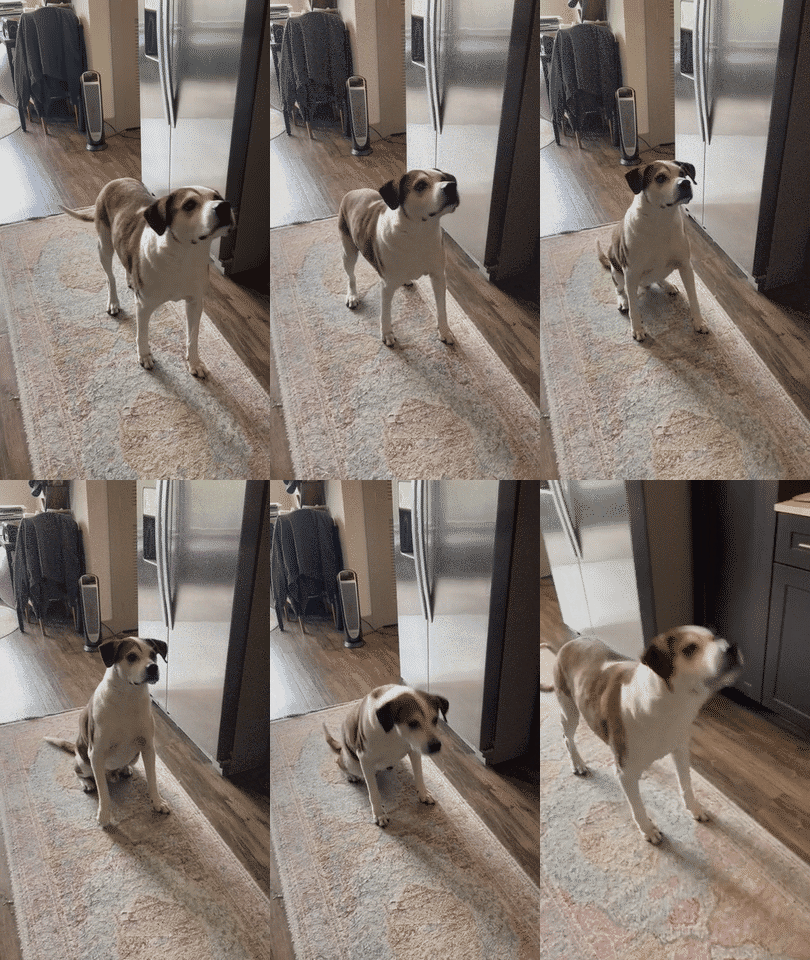 Here's Your Homework (without the snacks):1. ADDRESS YOUR WEAK SPOTSTeddie’s vet visit was a great example of how our brain loves to find the easiest way to move so you’ll automatically default to overusing your stronger muscles even if that isn’t an efficient movement pattern. We all have muscle imbalances in our body based on which hand is dominant, what you do all day, or the sport you play. Full body workouts like Yoga and Pilates are a great way to work on strengthening both sides of your body. Tightness or stiffness can also be a sign you’ve got some underlying weakness in your postural and core muscles. If you’re weak, your body will tighten up in key spots to hold you up against gravity. Finding your tight and weak spots will help balance you out. 2. FOCUS ON YOUR LEGSTeddie’s vet visit was also a great reminder of how important it is to keep your legs strong as you age. Have you ever noticed that some folks have difficulty standing up from chairs/sofas as they get older? It’s related to a variety of things- hip weakness, stiffness in their joints, and/or a fear of falling that can develop due to decreased vision, balance, and flexibility. The fear leads to them not leaning their trunk forward enough to stand up and it just spirals from there. And guess what they start to do- overuse their arms to stand up! Just like Teddie… Left unchecked it'll increase their fall risk. Falls are the leading cause of unintentional injury-related deaths for age 65 or older. Having a solid strength training program for your legs is a key component to staying active & agile as you age. Unlike dogs, we can't walk on our hands! Focus on your hip mobility & strength and use these exercises to help you get started. DAILY MOVES: Take Sit to Stand breaks throughout the day. It’ll help counteract all the negative effects sitting has on your posture and joints but also help your heart stay healthy. There is research showing that standing up once every 20 minutes is more effective than walking 15 minutes on a treadmill for cardiovascular and metabolic changes. It’s also more beneficial than standing up 35 times at once. You’ll want to stand up every 20 minutes to overcome the negative effects of sitting. Teddie has to do 3 sit to stands per day but you need to do 3 per hour of sitting.
POWER MOVES: Add these Power Moves to workout routines for stronger legs, hips, and core muscles. OVER TO YOU: Which moves will you start with this week? FYI if you need snacks to get you motivated at first like Teddie, aim for protein snacks (it's OK to sneak in a little dark chocolate too). To Strong Legs! Mollie P.S. Want more help with your tight & weak spots? Our next round of SHINE™ & opportunity to be a part of Rest Crew #2 is coming up soon- get on the waitlist here. Did you know tight hips can make it harder for your core muscles to fire properly? Here’s a stretch to release your low back, hip, and pelvic floor muscles. It’s actually a yoga relaxation pose that is calming to your nervous system. HAPPY BABY STRETCH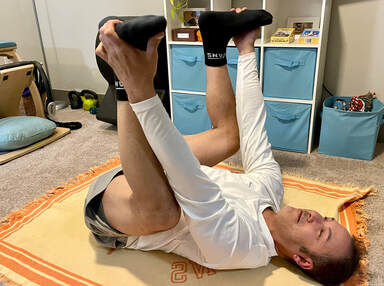 HOW TO DO THE HAPPY BABY STRETCH:
Make Sure You Avoid:
How To Modify:
How To Intensify:
PRO TIP: Add the Happy Baby Stretch to these 3 Moves to Prep for Better Core Workouts. Staying flexible in your hips will help you have a stronger core which helps improve your posture and performance. The Happy Baby Stretch is a great one to do daily at the end of a workout or your day. Go ahead and add it to your Rest Toolbox. To Happy Hips! Mollie P.S.EXCITING NEWS- our next round of SHINE™ & opportunity to be a part of Rest Crew #2 is coming up soon- get on the waitlist here. It's daylight savings time! Although I do wish we could just leave the time alone, I do prefer more light at the end of the day. It can take a week for our bodies to adjust to the change though. If you struggle with the time change, you can find 2 strategies to help you adjust faster here. There's also something simple you can do each morning to help your day have more ease & flow. I'm not talking about things like: -making your bed -staying off your phone for the first 20 minutes -drinking glass of water -doing a few breathing exercises and stretches -having a meditation practice Those are all great moves to start your day and make part of a morning routine. Slowly warming up over that first 15-30 minutes will help you tap into your intuition and creativity setting you up to have your best ideas and better focus for the day. But first, I want you to try something while you are still in bed. Before you even open your eyes, say to yourself "Today's my BEST day ever!" Set the intention for your day with this simple statement and watch how much smoother your day goes. Rise like the sunrise. Slowly waking up. Start with a positive intention about your day. Train yourself to be mindful of your first thought. Make it a good one. Your body & brain will appreciate the positive vibes. Have a great day! Mollie P.S.EXCITING NEWS- our next round of SHINE™ & opportunity to be a part of Rest Crew #2 is coming up soon- get on the waitlist here. You know that warm, fuzzy feeling that washes over you when you’re in love? That's your LOVE hormone, Oxytocin, in action. It helps encourage us to bond with others. Like a mom & her baby while nursing. Although physical touch is the fastest way to boost your Oxytocin levels, there are some simple moves you can do to get that loving feeling going. Just a 10-20% increase will promote the relaxation response- hello Relaxed Body! Oxytocin increases your mood, empathy, trust, and openness to connect with others. It decreases cortisol, inflammation, the pain threshold, stress, and even withdrawal symptoms. Signs that it’s low include muscle aches, poor sleep, irritability, anxiety, sugar cravings, poor communication, and difficulty achieving orgasm. It definitely has some powerful jobs in the body so let’s get it flowing. 13 Moves To Boost Your Love Hormone, Oxytocin:
Lovingkindness Meditation (say out loud to yourself): May I be happy. May I be safe. May I be free of physical pain and suffering. May I be able to recognize and touch harmony and joy in myself. May I nourish wholesome seeds in myself. May I be healthy, peaceful, and strong. Spread the Love: You can say it for other people you care about as well but only after you’ve said it for yourself first. You can even expand it to strangers or a larger community. When you say it for others, change the word “I” to the name of the person (or group) you would like to say it for. Example: May (name of loved one or group) be happy. May (he/she/they) be safe. OVER TO YOU: Pick one of the Oxytocin Moves above to boost or bring back that loving feeling. See which ones work best for you. You don’t have to be into the hoopla around Valentine’s Day this year, but it's a great reminder to #1 do something that brings you joy and #2 find time to connect with others this week. Ender, Teddie and I will probably do a movie night tonight, but started the week off enjoying that awesome Super Bowl. On Friday, I'm looking forward to a karaoke happy hour I've got planned with some old friends. That'll hit a few moves on the list for me. What about you? Hope you have time to play & have some fun too! Happy Valentine's Day! Mollie P.S. No pet? No problem. Just stare into Teddie's eyes... P.P.S. Want more Relaxed Body Moves to add to your Rest Toolbox? Get started with this 3 minute Active Recovery Workout: Download Now |
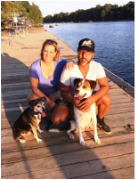
Mollie, Ender, Ty & Teddie
Mollie Miller, PT
|
 RSS Feed